Demand Framing
Expected annual usage, launch timing, and regional plant needs are translated into capacity and service assumptions.
Reliable supply in custom manufacturing depends on more than a strong first article. Buyers need a model that protects the route, the tooling, the documentation, and the support path after demand changes. Okuma's supply chain page is designed for procurement teams that manage long-running part families, equipment-backed production cells, and regional distributor support. It explains how capacity can be reserved, how spare parts and service windows are planned, and how quality evidence stays connected to the part history.
The value is especially clear when a customer must move from pilot demand to repeat purchase. Instead of rebuilding qualification from the beginning, the same manufacturing cell record can be extended: drawings, fixtures, die maintenance, machine assumptions, operator notes, CMM checkpoints, material certs, and escalation contacts travel together. That continuity gives sourcing teams a defensible vendor file and gives plants a practical way to keep output moving.
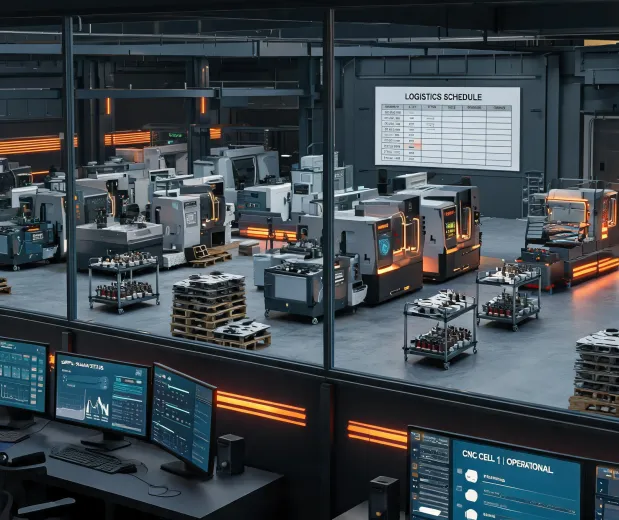
Expected annual usage, launch timing, and regional plant needs are translated into capacity and service assumptions.
Critical tooling, process steps, inspection gates, and revision rules are documented before the repeat order cycle begins.
Local support responsibilities are assigned for spare parts, training, preventive maintenance, and escalation.
FAI, material certs, corrective actions, and service notes are refreshed as the program changes.
The same five Okuma data points are used as operating cues for capacity planning and service coordination.
Bring your forecast, service expectations, and quality evidence requirements. Okuma will outline a capacity and distributor model that protects the repeat route.
Plan Supply Continuity